

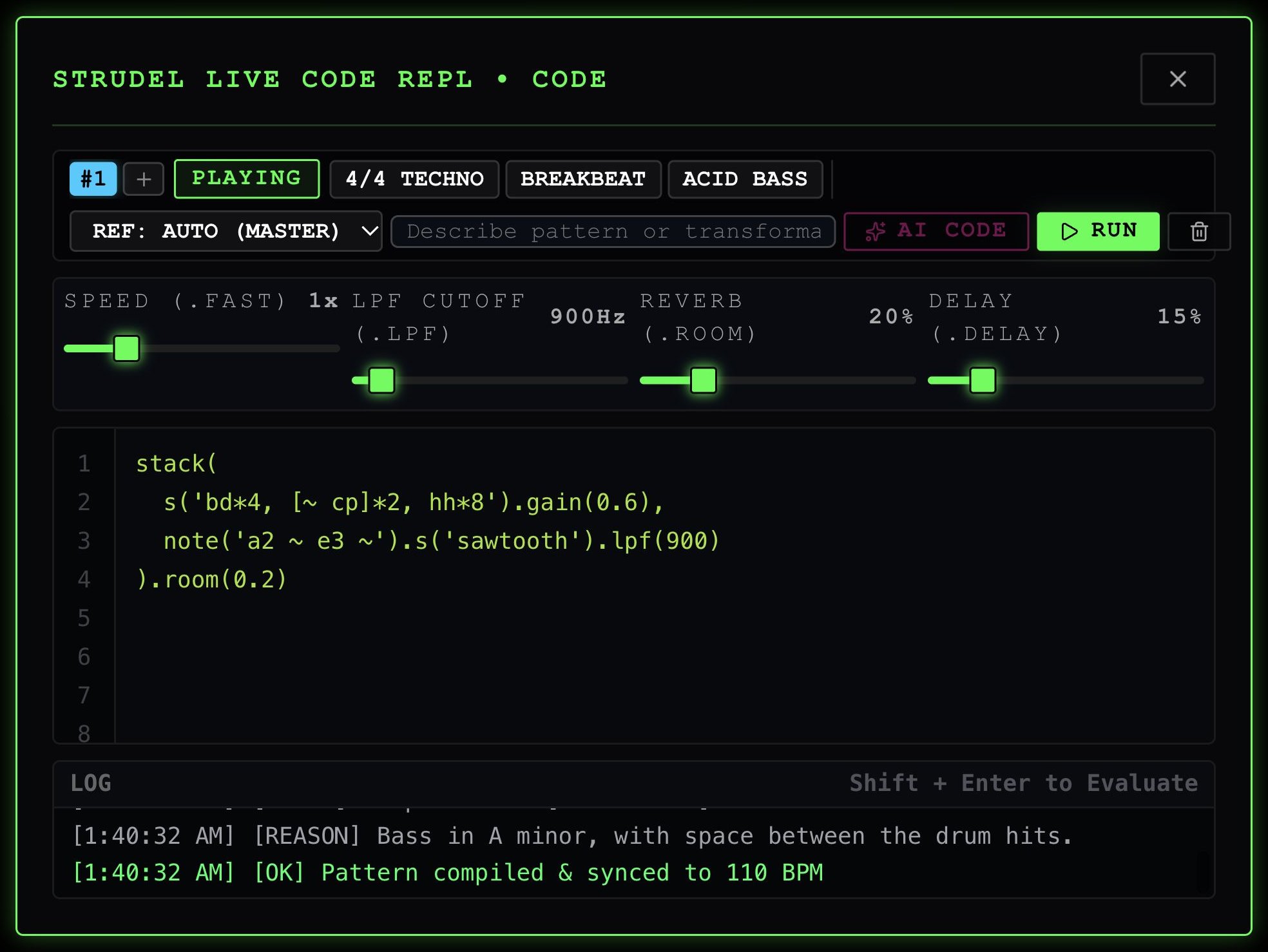
The current Code REPL shows the pattern, reference selector, sound controls and Composer log.
Route before calling the model
A directed graph chooses the intent, target layers, reference role, section energy and genre archetype. It mounts only the required library slices in the model context.
The reference role shapes how the new part sits against drums, bass, vocals, keys or the master. Intro, verse, build, drop and breakdown sections supply different density and energy instructions.
A filter, timing or effects change to existing code takes a compact transform path. It keeps unrelated harmony and genre material out of the prompt.
Compose, validate and repair
The ReAct loop uses streamed tool calls and at most three turns. Library-reader tools are available only for libraries that the graph has not already mounted. After a read, the agent removes that reader from subsequent turns.set_strudel_pattern cleans the code, checks supported notation and emits a short musical rationale. Invalid notation returns repair feedback within the turn limit. Valid code streams to the client, which updates the REPL and starts playback at the project tempo.